

It’s getting to be tradition, it seems. When Canada takes to the ice in best-on-best competition, the country stands up a little straighter, red maple leafed jerseys become acceptable work attire(and invitations for high-fives from strangers, naturally), the water cooler becomes a daily hotstove to discuss powerplay formations and goaltending development, and gold is the only acceptable shade of medal.
Oh, and a Kelowna Rocket will be in the lineup, representing the True North, Strong and Free.
With the 2026 Milano Cortina Olympics growing ever closer, hockey analysts, both professional and armchair, made their picks for Team Canada’s roster. Google’s autocomplete function tells the tale of a hockey nation, obsessed. Try typing any variation of “Canada 2026” or “Team Canada” and you will be given pages and pages of opinions on the perfect lineup to don the maple leaf.
The biggest names in hockey are, of course, top of the list. McDavid is a lock. MacKinnon is in. Crosby will wear the ‘C,’ and Makar will play big, big minutes. Western Hockey League alum Brayden Point and Sam Reinhart rounded out the six players named to the preliminary roster.
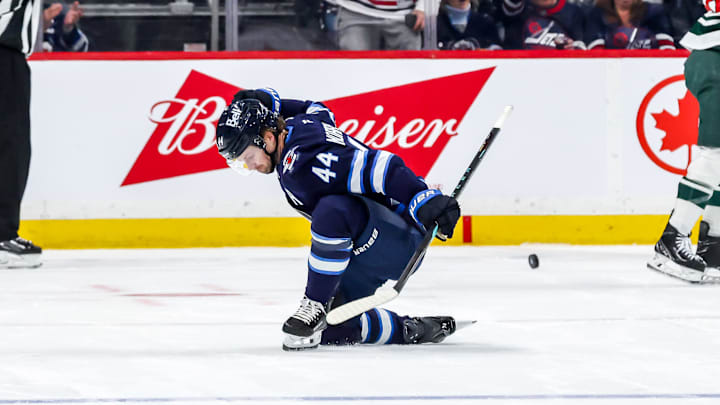
But, considered a lock, alongside the finest players in the National Hockey League, is Kelowna Rockets star defenceman Josh Morrissey. And so he should be.
The Calgary product, who joined the Rockets in a midseason trade in 2014-2015 and helped propel Kelowna to a WHL championship and appearance in the 2015 Memorial Cup final, has elevated his game to new heights.
Over the past three NHL seasons, Morrissey is top-five among NHL rearguards in point production. The others on the list? The last four Norris Trophy winners in Cale Makar, Quinn Hughes, Adam Fox, and Erik Karlsson.
His performance at the 2025 4 Nations Face-Off further defined him as one of the finest blueliners in hockey, helping Canada to a gold medal in the first-of-its-kind tournament that proved to be a massive hit for the NHL and the game itself.
Rockets fans didn’t have a long time to appreciate Morrissey’s understated game, but his unflappable, patient approach, paired with high-end skill and quick, brilliant puck-moving decisions left an indelible impact on the franchise.
Rockets fans are also no stranger to turning on the television to root on Canada in best-on-best competition, and seeing a former member of the roster representing on the global stage.
In the historic 2010 Vancouver Olympics, it was Shea Weber and Duncan Keith, two of the best defensemen of their era, playing massive roles in Canada’s gold medal effort on home ice. Keith, who suited up in Kelowna in 2002-2003 and helped the Rockets to a WHL Championship that season, led the 2010 Olympic defenders in assists (6), and played north of 21 minutes in the gold medal game. Weber, a Rocket from 2001 to 2005 and winner of two WHL titles and a Memorial Cup, tied Keith with six points to lead Canada’s blueline, also played more than 21 minutes in the gold medal final.
In 2014, Kelowna faithful had a trio of former Rockets to root for in Canada colours, with Weber and Keith being joined by forward Jamie Benn, in the midst of a breakout season with the Dallas Stars. Canada would play an incredibly disciplined defensive game, neutralizing high-powered opposition on the way to a gold medal repeat. Over six games, they’d score 17 goals and allow just three. Weber would tie Drew Doughty for Canada’s points lead with six, while Benn (2 points) and Keith (1 point) would contribute with major roles in the dominant effort.
With the NHL’s participation in the upcoming 2018 Olympics seeming unlikely, hockey fans were treated to the World Cup of Hockey in a preseason tournament in the fall of 2016. What they didn’t know was it would be the last best-on-best international hockey tournament for nearly a decade.
Keith, Weber, and Benn were again selected for Canada’s roster, but the Chicago star and Dallas captain were unable to participate in the event. Weber was back in Canada colours, however, joining Sidney Crosby and Jonathan Toews in the team’s leadership group - the same trio who wore letters in the 2014 Games. Weber would contribute an assist in the tournament, while playing his bruising, shutdown style en route to a Canadian victory over Team Europe in the final.
For those fans reading this and furiously searching rosters, you are correct; the Rockets were also represented in the 2010 Olympics by Lauris Dārziņš (Latvia), and the 2014 Olympics by Darzins, Alex Edler (Sweden), and Thomas Raffl (Austria). Plus, the 2016 World Cup of Hockey featured Mikael Backlund (Sweden), and a young German centreman in the very beginning of his NHL career named Leon Draisaitl, suiting up for Team Europe.
The 2018 Games in South Korea are, in hindsight, the beginning of a “what could have been” era for Canadian hockey fans. McDavid and MacKinnon were supposed to join Crosby, and the torch would begin to be passed as the two-time defending Olympic champions would pursue a third consecutive gold medal.
And, for the Rockets faithful, more alumni suiting up in the maple leaf. The trio of Weber, Keith, and Benn were still impact players, with the rearguards each placing top-six in Norris voting the season prior, and Benn firmly established as a top-ten Canadian forward in the National Hockey League.
But the water coolers and reddit boards and blogs and television analysts all were forced to play a game of “what-if,” as the NHL opted out of Olympic participation in 2018. And 2022. Admit it; you text your group chat your own version of the line formations, suggesting McDavid needed Jamie Benn on his left wing, or Drew Doughty’s ideal partner was the hulking Weber.
Hence the collective sigh of national relief, peppered with well-earned skepticism, when the league decided to replace the 2025 All-Star Weekend (an event that has long lost its way. And impact. And importance) with the first-of-its-kind 4 Nations Face-Off. And, despite the small, four-team format, and the “lets invent a trophy and see how the guys respond” approach, the 4NF-O(which looks more like a scientific compound) was a massive success.
It was cathartic to see Crosby introduced as Canada’s captain. It was spine-tingling when Jon Cooper rolled out a Makar, McKinnon, Crosby, Reinhart, McDavid first powerplay unit in game one. It was group-chat-catnip when those three fights broke out in the opening nine seconds of Canada’s first matchup with the United States. And it was great to see, again, a Kelowna Rocket wearing Canada’s colours in a best-on-best hockey tournament.
 Add us as a preferred source on Google